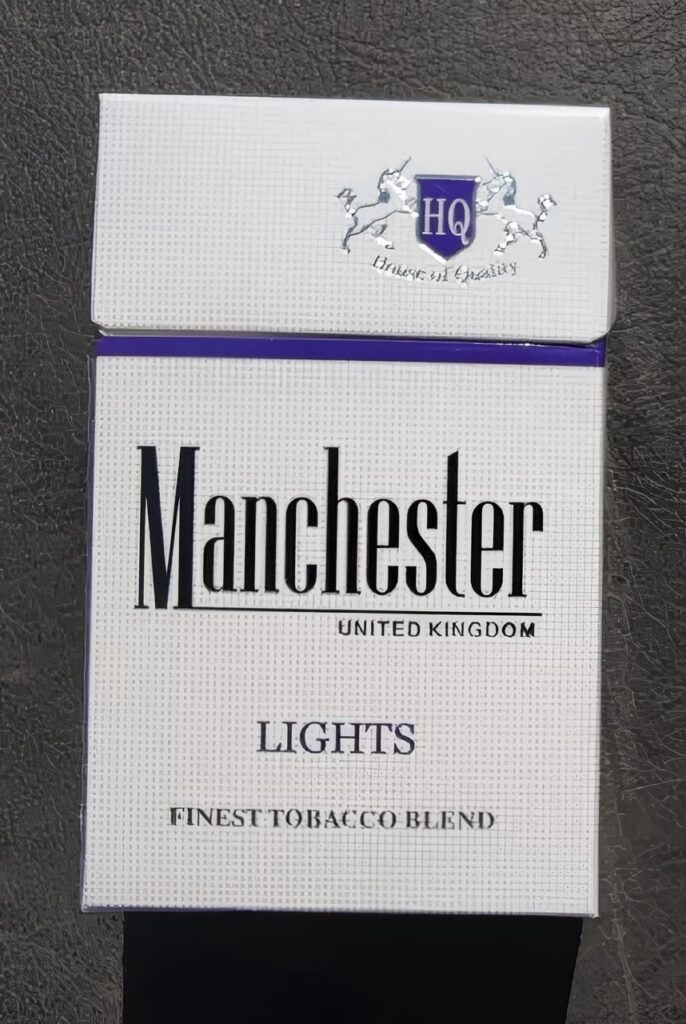
“Manchester Blue” is not a precise product identity. CigaretteAtlas currently has separate live records named Manchester Light Blue, Manchester Sapphire Blue and Manchester Blue Special Edition. To identify the intended record, match the complete printed brand and variant wording, then check the market, pack identifiers and source date. Colour alone, a cropped image or an old search-result URL is not enough.
This is an identification guide, not a strength, safety or availability comparison. It does not treat the word “blue” as evidence that two packs contain the same product, and it does not infer a specification that is absent from a supplied pack or a dated primary source.
The three current CigaretteAtlas records at a glance
| Current record | Exact wording to look for | What the page can help confirm | What the name alone cannot prove |
|---|---|---|---|
| Manchester Light Blue | “Manchester” plus “Light Blue” | Which CigaretteAtlas record carries that full catalogue name | Tar, nicotine, origin, current stock or equivalence to another blue-labelled variant |
| Manchester Sapphire Blue | “Manchester” plus “Sapphire Blue” | The distinct Sapphire Blue catalogue destination | That “sapphire,” “safari blue” or any generic blue query necessarily means this record |
| Manchester Blue Special Edition | “Manchester” plus “Blue Special Edition” | The current record intended for that complete phrase | That an older page, a blue pack image or the words “Manchester Blue” refer to this edition |
Start with the Manchester brand index when the query is broad. Open an individual product record only after the full name or another strong identifier narrows the candidate set.
Why the colour word is a weak identifier in Australia
Australian tobacco packaging rules limit how brand and variant names may appear and require standardised packaging. The Australian Government’s packaging overview states that retail packaging must use the prescribed colour, carry required warnings and display brand and variant names only in specified ways. Sections 58 and 59 of the current Public Health (Tobacco and Other Products) Regulations 2024 separately address brand names and variant names on cigarette packs and cartons.
That makes the printed words more useful than a shopper’s memory of a colour. A search such as “Manchester blue packet” may describe a visual impression, a shortened name, a different market’s packaging or an older image. It is a candidate-generating phrase, not a final match.
The same caution applies in reverse. Seeing “Sapphire Blue” in a search result does not establish the supplied pack’s market, date, quantity, barcode or emissions figures. Those are separate fields and require their own evidence.
A six-step variant-identification checklist
1. Preserve the search wording exactly
Write down the original phrase before correcting it. “Manchester sapphire,” “Manchester safari blue,” “Manchester light blue” and “Manchester blue special edition” should remain distinct observations. A corrected search form can be added later, but it should not overwrite what the reader actually typed or what a source actually printed.
2. Separate the brand from the possible variant
Treat Manchester as the brand candidate. Treat Light Blue, Sapphire Blue and Blue Special Edition as different variant or edition candidates until evidence shows otherwise. Do not collapse all remaining words into a single “blue” field.
3. Use the current index to form a candidate set
The Manchester index is the best starting point for a generic query because it exposes the current catalogue destinations together. An individual product page is better for examining one named record, but it should not be used to pretend the other candidates do not exist.
4. Compare identity fields, not promotional impressions
Use the strongest available fields in this order:
- complete brand and variant wording;
- barcode or GTIN, when visible and verifiable;
- pack or carton quantity;
- market-specific mandatory markings and responsible-business details;
- dated manufacturer, regulator or supplied-package evidence;
- the current canonical catalogue URL.
An image can support the comparison, but it is weaker when the side panels, barcode, mandatory markings or full name are cropped out. A page title is also only one field; it should agree with the visible record and source evidence.
5. Keep specification questions separate
A name match does not answer a nicotine, tar or “strength” query. Do not infer those figures from a colour word, and do not transfer numbers from a differently named or differently dated pack. If a reliable source does not establish the value for the exact record and market, report it as unverified rather than filling the gap.
6. Record the decision and its limit
A useful result is explicit:
- Matched: the complete name and a second strong identifier agree.
- Candidate only: the search wording points to one or more records, but decisive evidence is missing.
- Unresolved: sources conflict, the pack is incomplete, or the market/date cannot be established.
“Candidate only” is not a failure. It prevents a catalogue from turning a convenient guess into a product fact.
How to route common Manchester Blue searches
“Manchester Light Blue”
Use the Light Blue record as the first candidate. Confirm that the complete name appears on the evidence being checked. Do not substitute Sapphire Blue simply because both names contain “Blue.”
“Manchester Sapphire Blue” or “Manchester sapphire”
Use the Sapphire Blue record as the first candidate. A shortened or misspelled search can help retrieve the page, but the stored catalogue name should remain the exact supported name.
“Manchester Blue Special Edition”
Use the Blue Special Edition record. The words “Special Edition” matter. Removing them broadens the query and reintroduces ambiguity.
“Manchester blue packet,” “blue carton” or “Manchester blues”
Return the brand index or a short candidate list. Ask for the complete printed name, side-panel details or barcode rather than choosing a record from the colour phrase. A generic query should not be forced into a specific product page.
Current record, historical URL and supplied pack are different evidence
A live CigaretteAtlas record shows how the catalogue identifies an item at the check date. A historical URL shows that a page or search result existed at some earlier point. A supplied pack shows physical evidence for the particular item in hand. None automatically replaces the others.
For that reason, a retired URL in a search engine does not prove current catalogue availability, while a newly accessible page does not erase older naming evidence. The practical response is to preserve the observation date and direct readers to the current canonical record once the identity is clear.
Scope and adult health notice
This guide is for record identification by adults aged 18 and over. It does not recommend smoking or claim that one cigarette is safer than another. The Australian Government states that it is illegal to sell or supply tobacco to people under 18 in its overview of Australian tobacco laws, and its health-effects guidance explains that smoking harms the body and nicotine is highly addictive.
If the complete variant wording, market or pack identifiers cannot be verified, the accurate catalogue answer is “not yet established.”
Editorial method, sources and policy check
Editorial check: Checked by the CigaretteAtlas editorial team against the sources listed on this page.
Method: The editorial team compared the current Manchester variant names, product URLs and visible pack wording, then kept search labels, catalogue records and supplied-pack evidence as separate layers. Australian Government packaging and tobacco-law references already cited in the article were checked for regulatory context.
Contact and policy check (4 September 2026): The current CigaretteAtlas contact page lists support@cigscope.com and WhatsApp +44 7366482114. The site’s own shipping and returns policy states delivery to all regions of Australia with an estimated delivery time of 3–5 business days. Applicable delivery charges are shown separately at checkout. Orders remain subject to payment confirmation, stock availability and any required adult age or identity verification. Unopened products may be returned or exchanged within 14 days of delivery if they remain sealed and in their original condition; customers must contact support before sending an item back. The policy states that it does not exclude rights that cannot lawfully be excluded.
Transparency limits: The pages checked did not provide or independently verify a legal operator name, physical or returns address, ABN, licence, specific payment provider, or medical, legal or other professional reviewer qualifications. The editorial check above is source verification only; it is not medical, legal or other professional review.
Sources and records checked
- CigaretteAtlas product record used for the image
- CigaretteAtlas image file — WordPress media ID 320
- CigaretteAtlas shipping and returns policy
- CigaretteAtlas contact page
- CigaretteAtlas payment and ordering page
- CigaretteAtlas terms and conditions
- Manchester Sapphire Blue
- Manchester Blue Special Edition
- Manchester brand index
- packaging overview
- Public Health (Tobacco and Other Products) Regulations 2024
- overview of Australian tobacco laws
- health-effects guidance
Source check date: 4 September 2026.
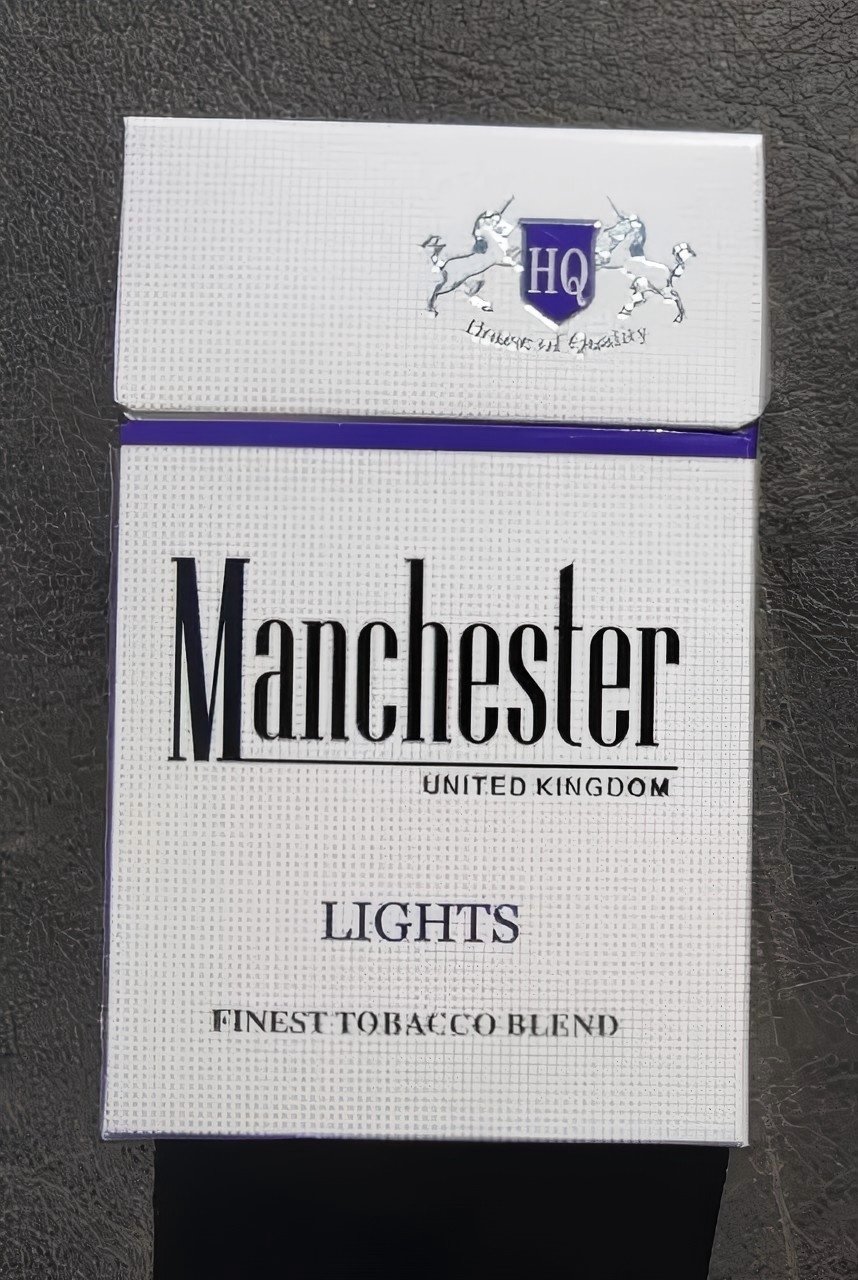
Image source and scope: Manchester Light Blue photographed pack used for variant-identification context. The image does not prove the supplied market, batch or current availability. Image source: CigaretteAtlas WordPress media library, media ID 320; associated product record; original image file; checked 4 September 2026. The media item is associated with the Manchester Light Blue product record and is used only as visual evidence of the photographed pack. Rights provenance beyond the site's existing media record was not independently verified.